
How a Cold-Hardy Native Fruit Can Transform Your Orchard Experience
Quick Facts
- Cold Hardiness: USDA Zone 5
- Mature Height: 10′-15′ (shorter in cool climates)
- Sun Requirements: Full sun to part shade
- Ripening Time: Early fall (earliest paw paw variety)
- Pollination: Requires cross-pollination
- Price: $34.99 (exceptional value for rare fruit tree)
The Forgotten Fruit That’s Making a Comeback
For decades, North American gardeners have overlooked one of our continent’s most remarkable native fruits—the paw paw. While exotic tropical fruits dominate supermarket shelves, this creamy, banana-mango flavored treasure has remained a well-kept secret among orchard enthusiasts. The Pennsylvania Golden Paw Paw (Asimina triloba ‘Pennsylvania Golden’) changes this narrative by offering the earliest ripening variety that makes paw paw cultivation accessible even in cooler regions.
Most home orchardists face three frustrating realities: limited growing seasons, unpredictable harvests, and the challenge of cultivating unique fruits in temperate climates. Conventional solutions—like forcing tropical varieties in greenhouses or settling for bland commercial fruits—often prove expensive and unsatisfying. The Pennsylvania Golden Paw Paw elegantly solves these problems by delivering:
- Reliable early-season harvests when other fruits aren’t yet ripe
- Natural cold hardiness down to -20°F (USDA Zone 5)
- Exotic flavor profiles without tropical growing requirements
The Science Behind the Golden Treasure
Physical Structure
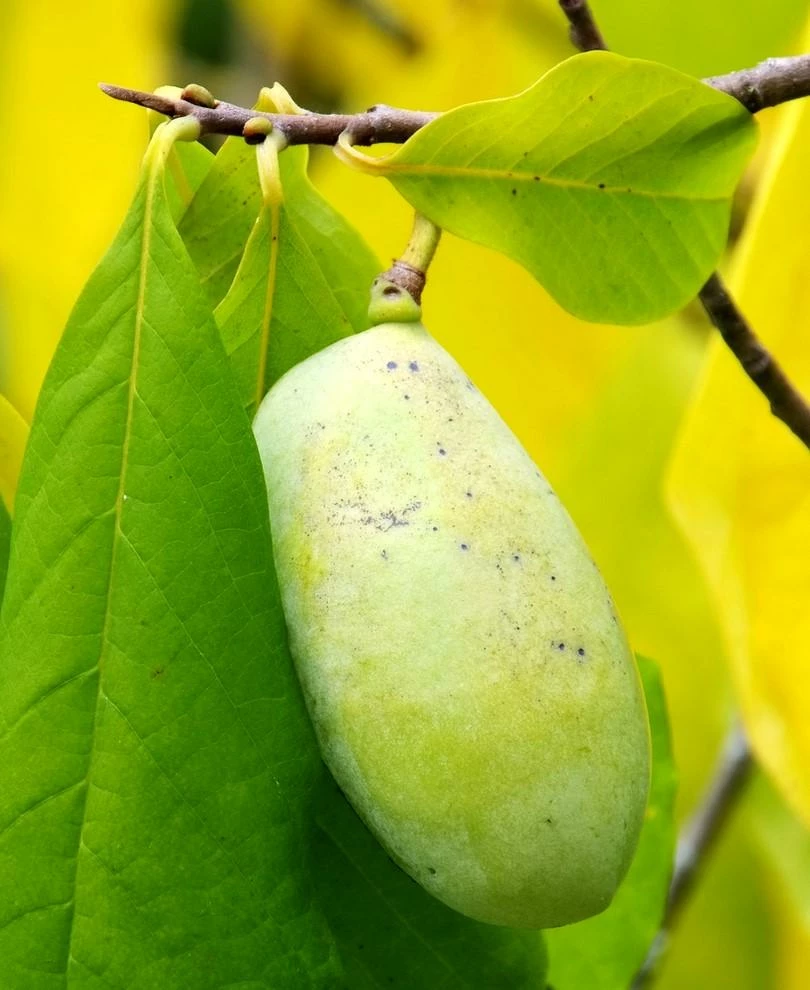
The Pennsylvania Golden Paw Paw grows as a small deciduous tree (10-15′ tall) with tropical-looking oblong leaves that turn golden yellow in fall. Its maroon flowers emerge before leaves in spring, developing into clusters of 3-6″ oblong fruits with golden-yellow skin when ripe.
Growth Mechanism
This variety has adapted to cooler climates by:
- Requiring fewer chill hours (100-400) than most paw paws
- Initiating bud break later to avoid late frost damage
- Concentrating fruit development in peak summer months
Ecological Relationships
Unlike most fruits pollinated by bees, paw paws evolved with carrion flies and beetles as pollinators. This explains the unusual but effective pollination technique of placing decaying meat near flowering trees—a fascinating example of co-evolution.
How Pennsylvania Golden Stacks Up Against Other Paw Paws
| Variety | Ripening Time | Cold Hardiness | Flavor Profile | Best For |
|---|---|---|---|---|
| Pennsylvania Golden | Early fall (earliest) | Zone 5 | Sweet, banana-cream with hints of vanilla | Cool climates or extending harvest season |
| Shenandoah | Mid-fall | Zone 5 | Rich, complex tropical flavors | Flavor enthusiasts |
| Sunflower | Late fall | Zone 5 | Mild, approachable flavor | Beginners, self-pollinating |
The Pennsylvania Golden Paw Paw offers unique emotional value by allowing growers in cooler regions to participate in the paw paw renaissance. Its early ripening provides the first taste of autumn while other varieties are still developing, creating a sense of horticultural accomplishment.
From Frustration to Fulfillment: A Gardener’s Journey
Initial State
Sarah, a Zone 6 gardener, longed to grow unique fruits but found most exotic varieties couldn’t survive her cold winters. Her attempts with figs and persimmons yielded disappointing results.
Trigger Event
After discovering paw paws at a farmers’ market, she became determined to grow them—only to find most varieties ripened too late in her short growing season.
Struggle
Initial plantings of standard paw paws produced flowers but rarely matured fruit before frost. Sarah nearly gave up on her dream of homegrown tropical flavors.
Solution
Planting Pennsylvania Golden Paw Paws transformed her orchard. Their early ripening meant reliable harvests, and their cold tolerance ensured survival through harsh winters.
Transformation
Now Sarah enjoys the earliest paw paw harvests in her region, sharing the exotic fruits with amazed neighbors and preserving the creaminess for winter enjoyment.
Why Pennsylvania Golden Paw Paw Deserves a Spot in Your Garden
For Cold Climate Gardeners
As the most cold hardy paw paw variety that reliably produces in short growing seasons, Pennsylvania Golden solves the fundamental challenge facing northern fruit enthusiasts: achieving tropical flavors in temperate climates. Its compact size (10′ in cool regions) makes it perfect for small orchards or urban gardens.
For Experienced Orchardists
By planting Pennsylvania Golden alongside later varieties, you can extend your paw paw harvest season by several weeks. The early blooms benefit from maximal pollinator activity in spring, while the fruit development coincides with peak summer warmth.
For Ecological Gardeners
As a native North American fruit tree, the paw paw supports local ecosystems better than introduced species. Its unusual pollination strategy creates opportunities to observe fascinating insect behaviors while growing a sustainable, low-input fruit crop.
“After years of failed attempts with other paw paw varieties in my Vermont orchard, Pennsylvania Golden finally delivered what others promised—abundant crops of those magical tropical-flavored fruits that ripen reliably before frost. My grandkids call them ‘nature’s pudding’ and fight over who gets the last one!”
— Michael R., Zone 5 Orchardist
Rediscover America’s Forgotten Fruit
The Pennsylvania Golden Paw Paw represents more than just another fruit tree—it’s a connection to North America’s botanical heritage and a solution to modern gardening challenges. Whether you’re seeking to push the boundaries of cold-climate fruit growing, extend your harvest season, or simply enjoy the most exotic flavors nature can produce in temperate zones, this remarkable variety delivers where others fall short.
Start Your Paw Paw Adventure Today
34.99 – Includes detailed growing guide and pollination tips