
How a naturally dwarfing fig variety solves the space vs. harvest dilemma for modern gardeners
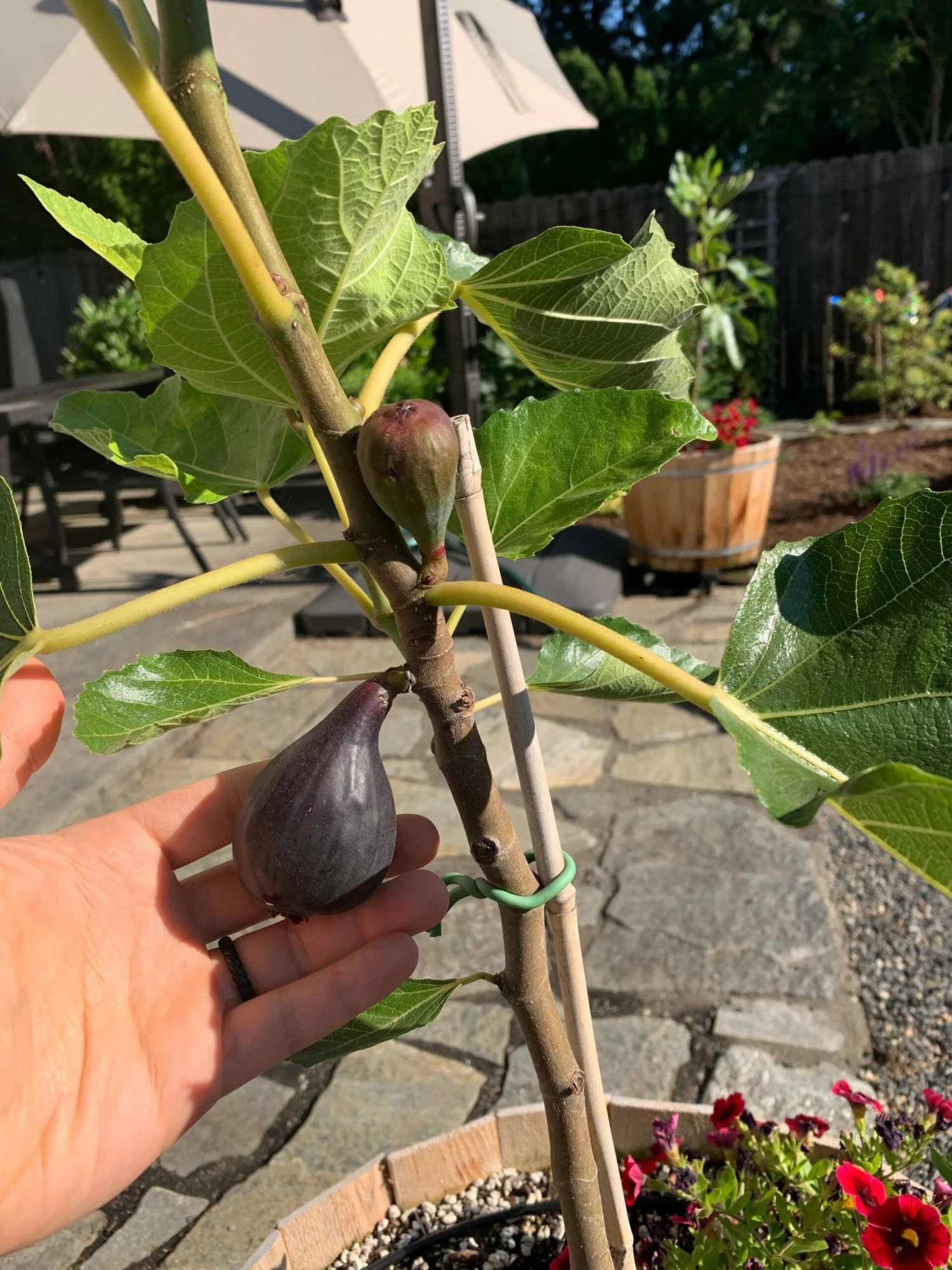
The Urban Gardener’s Dilemma
For years, home growers in cities and suburbs have faced an impossible choice: sacrifice precious square footage for fruit trees, or settle for sparse harvests from ornamental plants. Conventional solutions—pruning standard trees into submission or struggling with finicky dwarf cultivars—often lead to disappointing yields and endless maintenance.
Enter Ficus carica ‘Petite Negri’, the self-fertile fig that begins bearing fruit when barely a foot tall. This natural dwarf doesn’t just survive in containers—it thrives, producing two crops annually of wine-dark figs with jammy intensity. As backyard spaces shrink and balcony gardening booms, this cultivar represents a paradigm shift in edible landscaping.
Key Benefits at a Glance:
- Produces fruit at just 12″ tall (matures at 4-6′)
- Double harvest potential in warm zones (August-October)
- Self-pollinating for hassle-free cultivation
- Cold-hardy to Zone 7 with simple overwintering
The Science Behind the Sweetness
Physical Structure
Unlike artificially dwarfed trees requiring aggressive pruning, Petite Negri’s compact form is genetically encoded. Its shortened internodes (stem segments between leaves) allow dense fruiting wood development without sacrificing structural integrity. The thick, leathery leaves characteristic of the Violette de Bordeaux lineage provide exceptional drought resistance.
Biochemical Profile
The fig’s distinctive mahogany flesh owes its color to anthocyanins—the same antioxidants found in red wine. These compounds develop fully even in container-grown specimens, contributing to the 18-22% brix (natural sugar) content that makes this variety exceptional for fresh eating and preserves. Early ripening is facilitated by accelerated sugar accumulation in the final 10 days before harvest.
Growth Mechanism
As a breba-type fig, Petite Negri produces fruit on both previous season’s growth (main crop) and new wood (breba crop). This dual-bearing trait activates when the plant senses root restriction—a biological adaptation that makes it uniquely suited to container culture. The dwarfing effect is maintained through limited auxin production in apical meristems.
How Petite Negri Stacks Up Against Popular Figs
| Variety | Mature Height | Fruit Quality | Cold Hardiness | Container Suitability |
|---|---|---|---|---|
| Petite Negri | 4-6′ | Rich, berry-like | Zone 7 | ★★★★★ |
| Celeste | 10-15′ | Mild, honeyed | Zone 6 | ★★☆☆☆ |
| Brown Turkey | 15-25′ | Earthy, subtle | Zone 7 | ★☆☆☆☆ |
| Chicago Hardy | 8-10′ | Balanced | Zone 5 | ★★★☆☆ |
Data based on University of California Cooperative Extension trials and grower surveys
From Frustration to Harvest: A Grower’s Transformation
The Struggle
Meet Sarah K., an apartment dweller with a 5’x8′ balcony. After three failed attempts with standard fig varieties (“They either died overwintering or grew too large”), she nearly abandoned her dream of homegrown figs. Store-bought varieties lacked complexity, and farmers’ market figs often sold out before she could arrive.
The Solution
Planted in a 15-gallon fabric pot with citrus mix soil, her Petite Negri produced 14 figs its first summer—while still under 3′ tall. The “planted pot” overwintering method (burying the container 3/4 underground, then lifting before frost) proved simple enough for her busy schedule. By year three, she was harvesting enough for fresh eating, drying, and even trading with neighbors.
“What shocked me was the flavor intensity—like blackberry jam with a hint of caramel. My 4-year-old calls them ‘nature’s candy.’ Now my entire building wants cuttings!”
— Sarah K., Zone 7b balcony gardener
Expert Cultivation Tips
Container Strategy
Use fabric pots or wooden planters (18-24″ diameter) with excellent drainage. The “plant and lift” method extends growing range: bury pots outdoors spring-fall, then move to protected winter storage (35-50°F). Root pruning every 3-4 years maintains dwarfing.
Soil & Feeding
Mix 60% high-porosity potting soil with 20% compost and 20% perlite. Fertilize monthly April-July with balanced organic fertilizer (5-5-5). Excess nitrogen promotes leaf growth over fruiting.
Pest Management
Fig beetles and ants are primary concerns. Apply kaolin clay spray at fruit set. For container plants, sticky barriers on pot rims prevent crawling insects. Netting may be needed against birds.
Redefining Possible in Small-Space Gardening
The Petite Negri fig represents more than just a compact fruit tree—it’s a gateway to food sovereignty for space-limited growers. By delivering ornamental beauty, gourmet flavor, and remarkable adaptability in one genetically efficient package, this variety challenges conventional wisdom about what urban and suburban gardens can produce.
Start Your Fig Journey – $21.69
“The greatest service which can be rendered any country is to add a useful plant to its culture.” — Thomas Jefferson