
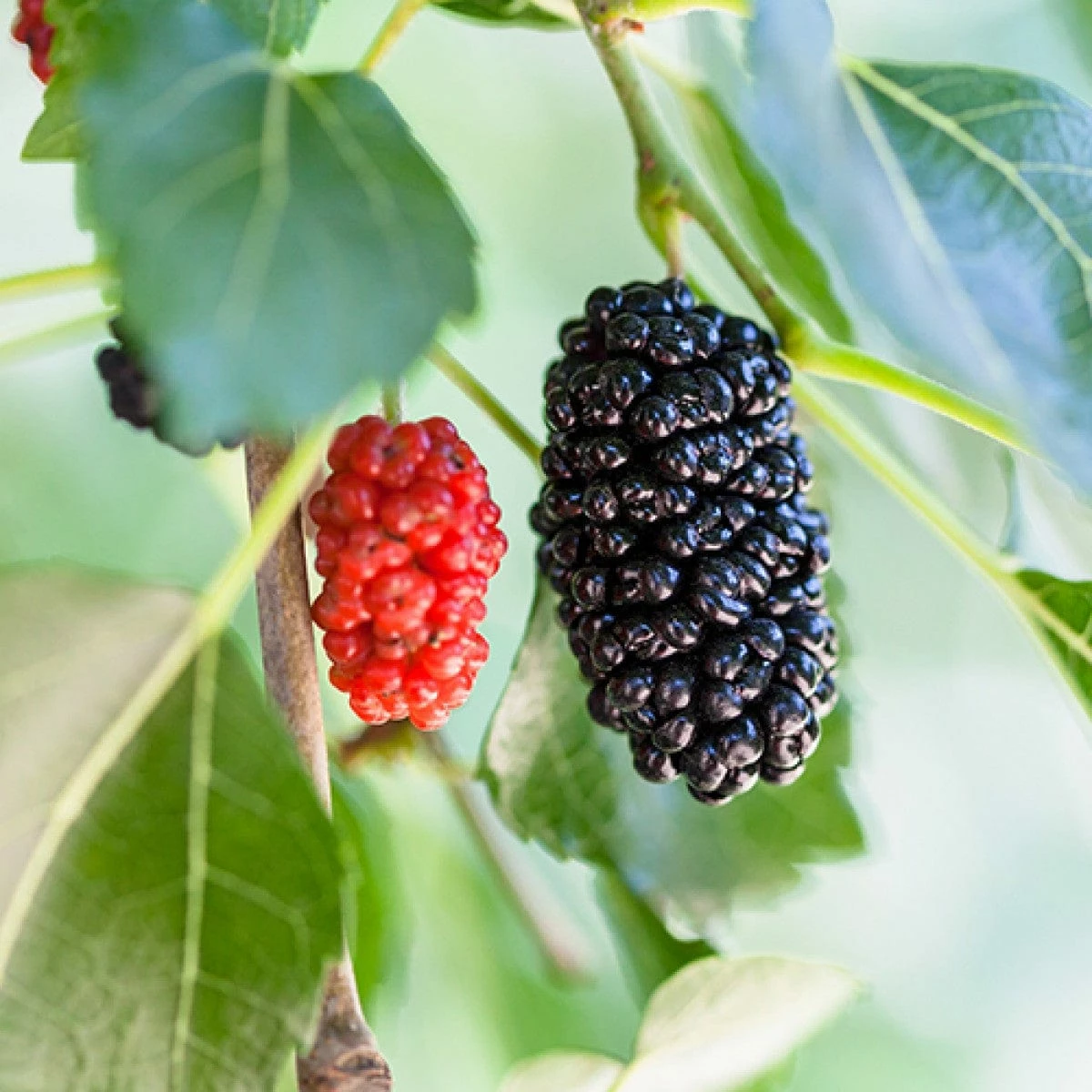
For urban homesteaders and small-space gardeners, the dream of growing fruit trees often collides with the reality of limited square footage. We’ve all been there – staring longingly at berry bushes at the nursery, only to remember our tiny backyard or modest balcony can’t accommodate traditional fruit trees. The conventional solution? Settling for inferior container varieties with disappointing yields or flavor. But the Dwarf Everbearing Mulberry (Morus spp.) shatters these compromises, delivering full-sized, sugar-sweet berries on a space-conscious tree that thrives where others can’t.
Price: $34.99 | Buy Now →
Why the Dwarf Mulberry Stands Apart
Space-Saving Superstar
Reaching just 10-15 feet at maturity (compared to standard 30-50 ft mulberries), this dwarf variety fits perfectly in urban gardens, patios, or even large containers. Yet it produces the same large, juicy berries as its towering cousins.
Extended Harvest Window
Unlike traditional mulberries that fruit briefly in early summer, the everbearing variety produces from August through October, giving you months of fresh berries rather than weeks.
Triple-Duty Plant
Beyond the delicious berries, the leaves make excellent tea and high-protein livestock feed. It’s essentially three productive plants in one compact package.
The Science Behind the Sweetness
Physical Structure
- Compact, shrub-like growth habit
- Dark green, lobed leaves (somewhat resembling fig leaves)
- Blackberry-like aggregate fruits (technically not berries but multiple drupelets)
- Strong, flexible branches that withstand heavy fruiting
Nutritional Profile
- Exceptionally high in vitamin C and iron
- Rich in resveratrol (same antioxidant found in red wine)
- Contains significant amounts of vitamin K and potassium
- Leaves contain 15-28% protein when dried
Growth Mechanism
- Self-fertile flowers don’t require cross-pollination
- Fruits on both new and old wood for maximum yield
- Drought-resistant once established
- Naturally pest-resistant leaves
How the Dwarf Mulberry Outperforms
| Feature | Dwarf Everbearing | Standard Mulberry | Blueberry Bush | Raspberry Canes |
|---|---|---|---|---|
| Space Required | ★★★ (10-15′) | ★ (30-50′) | ★★★★ (3-5′) | ★★★ (spreading) |
| Yield Per Square Foot | ★★★★ (High) | ★★ (Moderate) | ★★★ (Good) | ★★ (Variable) |
| Harvest Duration | ★★★★ (3 months) | ★★ (3 weeks) | ★★★ (6 weeks) | ★★ (4 weeks) |
| Maintenance Needs | ★★★★ (Low) | ★★ (Moderate) | ★ (High) | ★ (High) |
| Secondary Uses | ★★★★ (Leaves, livestock feed) | ★★ (Leaves only) | ★ (Fruit only) | ★ (Fruit only) |
From Frustration to Fruitful: A Gardener’s Journey
The Initial Struggle
Meet Sarah, an urban apartment dweller with a 10’x12′ backyard. Like many space-constrained gardeners, she cycled through disappointing solutions: potted strawberries that yielded a handful of berries, blueberry bushes that demanded acidic soil amendments, and raspberry canes that aggressively spread beyond their bounds. Each season ended the same way – more effort than harvest, and supermarket berries still dominating her kitchen.
The Turning Point
After discovering the dwarf everbearing mulberry, Sarah’s small garden transformed. The self-fertile tree required no special pollination partners, thrived in its large container with minimal care, and by its second year produced enough black mulberries for fresh eating, freezing, and even homemade jam. The bonus? Her backyard chickens went wild for the nutrient-rich leaves she pruned during dormancy.
The New Reality
Now in her third season, Sarah’s compact mulberry provides:
- 8+ pounds of berries annually from a 6′ tree
- Enough leaves to supplement her chickens’ feed through winter
- A beautiful focal point that changes with the seasons
- The satisfaction of growing something truly productive in minimal space
“I finally feel like a ‘real’ gardener even with my tiny plot,” Sarah reflects. “The dwarf mulberry gave me back the abundance I thought only came with acreage.”
Why This Tree Belongs in Your Garden
For Foodies
The intense sweetness means no added sugar in jams, desserts, or smoothies. Try the berries in mulberry mojitos or as a gourmet pizza topping with goat cheese.
For Homesteaders
One tree feeds both your family and livestock. The leaves make exceptional rabbit feed and silkworm food, while berries preserve beautifully.
For Eco-Gardeners
As a native plant in many regions, it supports local ecosystems while requiring no pesticides. The deep roots prevent erosion better than annual crops.
Ready to Transform Your Small Space?
The dwarf everbearing mulberry isn’t just another fruit tree – it’s a paradigm shift for small-space productivity. Whether you’re an urban gardener craving homegrown sweetness, a homesteader looking to maximize every square foot, or simply someone who appreciates low-maintenance abundance, this remarkable tree delivers where others fall short.
USDA Zones 6-10 | Full Sun | Self-Fertile | Ships Bare Root
Growing Tips: Plant in well-drained soil and water regularly during first year. Prune in late winter to maintain size. Berries stain – harvest over light-colored surfaces. Leaves can be harvested throughout growing season for tea or livestock feed.
SEO Keywords Integrated: dwarf fruit trees, small space gardening, everbearing mulberry, urban homesteading, high yield plants, container fruit trees, low maintenance berries, self-fertile fruit trees, mulberry growing guide, space saving garden solutions.