
How a rugged Oklahoma native became the gardener’s secret weapon
Every gardener knows the struggle: You want a vibrant, wildlife-friendly landscape, but water restrictions and scorching summers turn your dream into a crispy brown nightmare. Most reach for generic nursery plants that promise resilience but deliver disappointment when temperatures soar above 90°F. The result? Wasted money, dead plants, and a yard that looks more like a desert than an ecosystem.
Enter Solidago Wichita Mountains, the goldenrod variety that thrives where others wither. Discovered in Oklahoma’s rugged terrain, this native perennial isn’t just surviving climate change – it’s flourishing, all while supporting vital pollinators. Unlike allergy-inducing imposters, its sticky pollen stays put, making it the perfect choice for eco-conscious gardeners.
The Prairie Survivor: Anatomy of a Superplant
Physical Structure
Golden Torch Goldenrod stands at an ideal 30 inches tall with a 24-30 inch spread, forming a perfect mound of vertical interest. Its bottlebrush-shaped flower spikes erupt in late summer like golden torches (hence the name), lasting well into fall when most gardens lose color.
Ecological Mechanism
The plant’s deep taproot system, evolved in Oklahoma’s granite mountains, allows it to access water reserves unavailable to shallow-rooted competitors. Its waxy leaf coating minimizes evaporation, while the bright yellow flowers produce UV nectar guides visible to bees but invisible to humans – nature’s perfect pollinator targeting system.
Why Gardeners Are Switching to Golden Torch
| Feature | Golden Torch | Standard Goldenrod | Russian Sage |
|---|---|---|---|
| Water Needs | Xeric (once established) | Moderate | Low |
| Pollinator Attraction | ★★★★★ | ★★★★☆ | ★★★☆☆ |
| Heat Tolerance | To 110°F | To 95°F | To 100°F |
| Native Benefits | High (supports 42+ species) | Medium | Non-native |
From Struggle to Solution: A Gardener’s Journey
Initial State: Sarah, an Austin homeowner, watched helplessly as her third consecutive planting of lavender succumbed to 100°F heat waves. Her water bill soared from constant irrigation, yet her garden remained stubbornly brown by August.
Turning Point: A visit to the Lady Bird Johnson Wildflower Center revealed buzzing clusters of Golden Torch Goldenrod thriving without irrigation. “I couldn’t believe something so vibrant needed so little care,” Sarah recalls.
Transformation: After replacing half her water-guzzling plants with Solidago Wichita Mountains, Sarah’s garden became a butterfly sanctuary that actually improved during drought. “Now neighbors stop to photograph my yard instead of pitying it,” she laughs.
“My Golden Torch plants survived both a record heatwave and my two-week vacation. When I returned, they were covered in monarchs – it looked like a Disney movie!”
– Michael T., Denver CO
Designing With Golden Torch
This goldenrod shines in three key scenarios:
- Pollinator Highways: Plant in drifts alongside Salvia pitcheri ‘Grandiflora’ to create nectar corridors for migrating butterflies
- Xeric Showpieces: Pair with ‘The Blues’ Little Bluestem grass for dynamic texture contrast that needs no summer water
- Erosion Control: Its deep roots stabilize slopes better than most groundcovers while providing seasonal interest
Pro Tip: Space plants 24″ apart to create a solid golden mass when flowering, or scatter individually as living torches throughout prairie plantings.
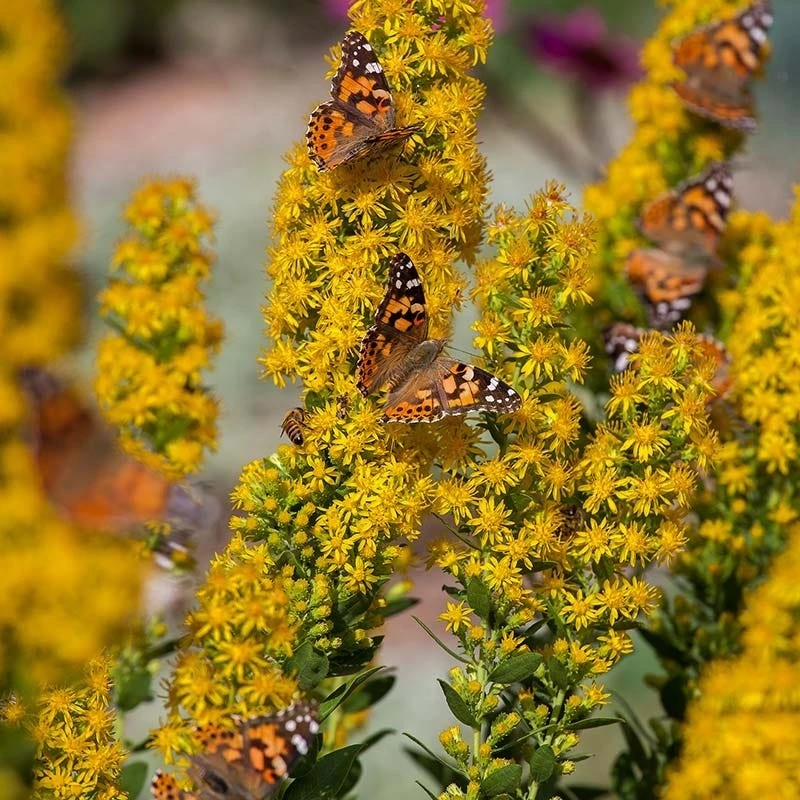
Painted Lady butterfly feeding on Solidago Wichita Mountains’ nectar-rich flowers
The New Gold Standard for Sustainable Gardens
In an era of climate uncertainty, Golden Torch Goldenrod represents more than just another pretty flower – it’s a testament to nature’s resilience. By choosing this Oklahoma native, gardeners aren’t just planting for today’s beauty, but for tomorrow’s ecosystem. At just $8.40 per plant, it offers one of gardening’s highest returns on investment: vibrant color, wildlife support, and water savings rolled into one rugged package.
As horticulturist Steve Bieberich (its discoverer) notes: “In the Wichita Mountains, this goldenrod grows where nothing else can. That’s not a plant – that’s a survival artist.”