
How a humble Florida native became the secret weapon of landscape designers and eco-conscious gardeners
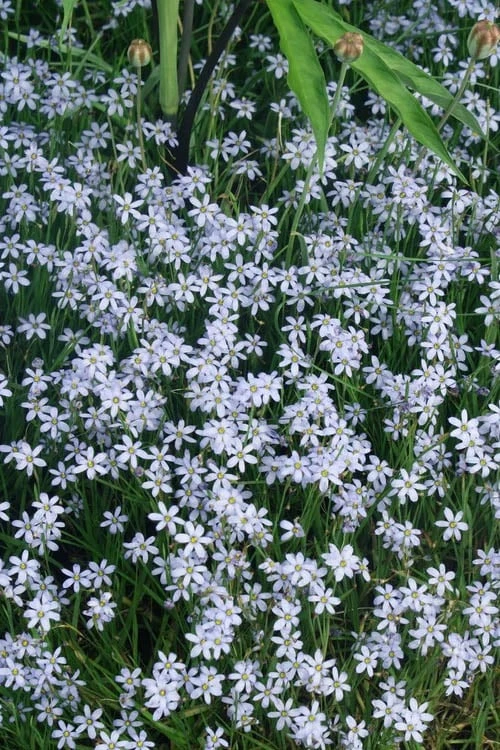
Every gardener knows the struggle: that awkward patch of land too wet for traditional ornamentals yet too visible to ignore. The frustration of watching expensive plants wither in clay soil or drown in seasonal runoff. Most resort to either constant maintenance or surrender to the problem area – until now. Discover how Suwannee Blue-Eyed Grass (Sisyrinchium angustifolium ‘Suwannee’), a Florida-native perennial, is revolutionizing difficult landscapes with its unexpected versatility and effortless beauty.
The Unlikely Hero of Problem Landscapes
Native to the banks of Florida’s Suwannee River, this compact perennial (8-10″ tall) defies conventional gardening wisdom. While most delicate-looking ornamentals demand perfect conditions, Suwannee Blue-Eyed Grass thrives where others fail:
- Flourishes in both standing water and drought conditions (once established)
- Performs equally well in full sun or deep shade
- Resists deer, rabbits, insects, and diseases
- Tolerates clay, sand, loam, and silt soils with pH from 5.0-7.0
Why Gardeners Are Replacing Traditional Solutions
The Science Behind Its Superpowers
1. Root System Architecture
The plant’s fibrous root matrix acts like a biological sponge, storing water during wet periods and slowly releasing it during drought. Unlike taproot systems that rot in wet soil, this adaptation allows survival in both flood and drought.
2. Leaf Surface Chemistry
Waxy leaf cuticles contain natural repellents that deter herbivores while resisting fungal pathogens – eliminating the need for chemical treatments.
3. Reproductive Strategy
Produces abundant seeds while also spreading vegetatively, creating dense colonies that suppress weeds without becoming invasive (unlike mint or bamboo).
How Suwannee Compares to Common Alternatives
| Feature | Suwannee Blue-Eyed Grass | Liriope (Industry Standard) | Hostas (Popular Shade Plant) |
|---|---|---|---|
| Water Tolerance | Thrives in wet or dry | Root rot in wet soil | Requires consistent moisture |
| Deer Resistance | Completely resistant | Moderate resistance | Deer candy |
| Flower Power | 6-8 weeks of blooms | Brief flowering | Flowers not significant |
| Year-Round Interest | Evergreen in zones 7+ | Winter dieback | Dies completely back |
Real Garden Transformations
“The Blue Eyed grass has stolen the show. We’re landscaping an otherwise ugly wet area and these little beauties are starting the transition. Ferns and red grasses will go behind them. All my plants came carefully packed in sturdy boxes, healthy and undamaged.”
— Satisfied Customer
“We bought this to plant near a small lake at the back of our home in Georgia. It looks very healthy and can’t wait until the spring to see it in bloom.”
— Georgia Gardener
Designer Tips for Maximum Impact
1. The Wet Area Wonder
Plant in dense drifts (12″ spacing) where downspouts empty or where water pools after rains. Combines beautifully with rushes and cinnamon ferns.
2. Rock Garden Star
Its grassy texture softens hard edges of stone paths and boulder features. Plant between stepping stones where foot traffic is light.
3. Container Magic
Use as a “spiller” element in combination pots with taller central plants. Its drought tolerance makes it perfect for neglected patio pots.
Ready to Transform Your Problem Area?
Each 1-gallon pot contains an established plant ready to thrive in your landscape. At just $20.89, it’s the most cost-effective solution for difficult spaces.
Why This Native Perennial Belongs in Every Southern Garden
For gardeners in USDA zones 6a-9b seeking low-maintenance native plants that deliver both ecological value and aesthetic appeal, Suwannee Blue-Eyed Grass represents a paradigm shift. It solves the fundamental dilemma of wet shade gardening while requiring none of the coddling demanded by traditional ornamentals.
As climate patterns become more erratic, this resilient Florida native offers a future-proof solution that actually improves with neglect. Whether you’re battling clay soil, seasonal flooding, or hungry wildlife, this unassuming perennial delivers results that belie its delicate appearance – making it quite possibly the most versatile plant you’ll add to your garden this year.