
“`html
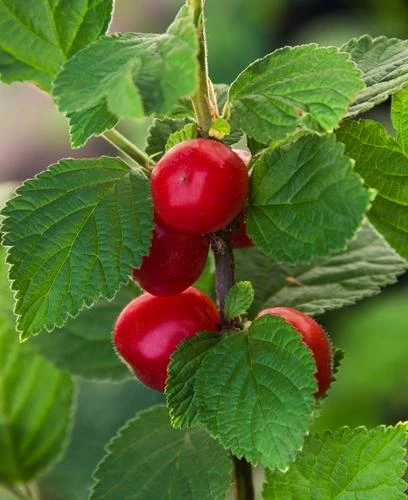
The Northern Fruit Grower’s Secret Weapon
For decades, gardeners north of Zone 5 have faced a cruel paradox: cherry trees that either die in winter or require elaborate protection. The standard advice? “Plant Montmorency and pray.” But when -40°F winters kill even the hardiest cultivars, what then? Most resort to expensive imported fruit or flavorless alternatives – until now.
Meet Prunus tomentosa, the Nanking cherry. This unassuming shrub from the Mongolian steppes delivers authentic cherry flavor where other trees fail, requiring no special care while producing bumper crops of versatile fruit. It’s not just surviving the cold – it’s thriving in conditions that would kill conventional cherries.
Why Gardeners Are Abandoning Traditional Cherry Trees
The Zone 3-4 Conundrum
Most cherry varieties start failing below -20°F, requiring elaborate winter protection that still often fails. Nanking cherries naturally tolerate -40°F without protection.
The Waiting Game
Standard cherry trees take 4-7 years to fruit and need meticulous pruning. Nanking seedlings often fruit in 2-3 years with minimal care.
Space Constraints
Full-sized cherry trees require 15-20′ spacing. At just 10-12′ tall, Nanking cherries fit urban lots and can be hedge-planted at 4-5′ intervals.
Botanical Breakthrough: The Science Behind the Superfruit
Structural Advantages
- Multi-stemmed architecture prevents snow damage common to single-trunk trees
- Fuzzy leaves (tomentosa = “hairy”) reduce moisture loss and deter pests
- Shallow fibrous roots thrive in poor soils where taproot trees struggle
Biochemical Adaptations
- Cryoprotectant sugars in cells prevent freeze damage
- High phenolic content makes fruit naturally resistant to mold
- Drought-induced dormancy allows survival with minimal water
How It Works: The Cold-Hardy Mechanism
Unlike temperate cherries that evolved in milder climates, Nanking cherries developed in continental Asia where -40°F winters and 100°F summers are normal. Their secret lies in:
- Controlled dehydration of cells before freezing
- Ice-nucleating proteins that guide crystal formation away from cell walls
- Spring-loaded buds that only emerge after consistent warmth
This creates what botanists call “the Siberian effect” – extreme climate adaptation without sacrificing fruit quality.
The Cold-Climate Cherry Showdown
| Feature | Nanking Cherry | Montmorency (Standard) | Romeo Dwarf Cherry |
|---|---|---|---|
| Min Temperature | -40°F | -20°F | -30°F |
| Years to Fruit | 2-3 | 4-5 | 3-4 |
| Space Needed | 4-5′ (hedge) | 15-20′ | 8-10′ |
| Drought Tolerance | Excellent | Poor | Moderate |
| Yield Per Plant | 8-12 lbs | 15-20 lbs | 5-8 lbs |
The Intangible Advantage
Beyond specifications, Nanking cherries offer something rare in cold-climate gardening: effortless abundance. While other plants demand coddling, these shrubs thrive on neglect, creating what Russian gardeners call “the babushka effect” – grandmothers plant them once, then harvest for decades with minimal care.
From Frustration to Harvest: Real Growers’ Journeys
“After losing three cherry trees to polar vortices, I was ready to give up. My Nanking hedge not only survived -40°F but gave us 15 pounds of fruit the next summer. The jelly tastes like wild cherries from my childhood.”
— Margaret K., Edmonton, AB (Zone 3b)
“As an urban gardener, I never thought I could grow cherries. Now I have a 6-foot edible fence that feeds my family and the neighborhood birds. The bushes actually look prettier than my ornamental shrubs!”
— David R., Minneapolis, MN (Zone 4a)
“I planted these as a windbreak for my orchard. Three years later, they’re our most reliable crop – no sprays, no winter damage, just gallons of fruit that make incredible kombucha.”
— Elena S., Fairbanks, AK (Zone 2b)
Creating Your Cold-Hardy Cherry Oasis
Site Selection
- Choose full sun locations (6+ hours daily)
- Well-drained soil is critical – avoid clay pockets
- Space plants 4-5′ apart for hedges, 6-8′ for individual shrubs
- Plant at least two seedlings for cross-pollination
Care Simplified
- Year 1: Water weekly if dry, no fertilizer needed
- Year 2+: Only water during extreme drought
- Prune lightly in early spring to shape if desired
- No winter protection required in Zones 3-8
Harvest Tips
- Fruit ripens over 2-3 weeks in July
- Harvest when deep red but still firm
- Use berry rakes for efficient picking
- Refrigerate immediately for fresh eating
Price includes detailed growing guide and lifetime support from our horticulture team