
The Winter Color Paradox
Gardeners in zones 7a-10a face a cruel irony each year – just when we crave vibrant colors to combat winter’s gray monotony, most flowering plants enter dormancy. The conventional solutions? Settle for evergreen foliage alone, invest in temporary annuals, or resign ourselves to a colorless landscape until spring.
But the Lady Vansittart camellia japonica rewrites this seasonal narrative with its spectacular late-winter floral display that evolves more intriguingly with each passing year.
Why Your Garden Needs This Living Masterpiece
Camellia japonica ‘Lady Vansittart’ isn’t merely another flowering shrub – it’s a horticultural phenomenon that solves three universal gardening dilemmas simultaneously:
- The Winter Color Void: Blooms February-March when most gardens are barren
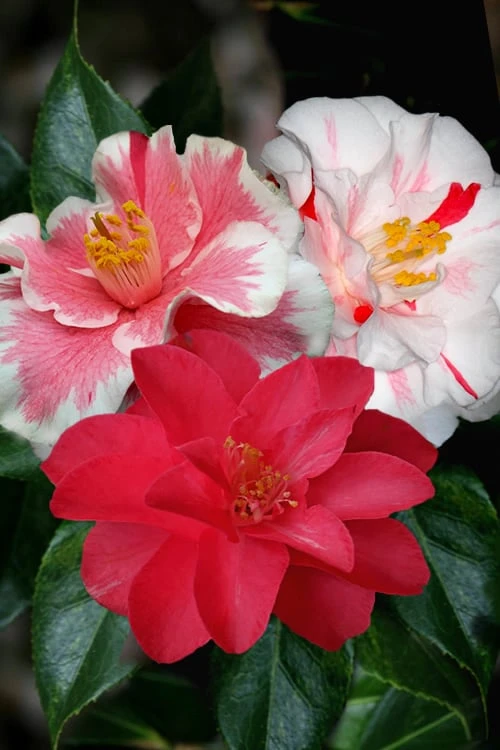
- The Monotony Problem: Produces 4″ semi-double to double flowers in 6+ color patterns on a single plant
- The Space Compromise: Thrives in containers for northern gardeners yet reaches 15′ tall in southern landscapes
Unlike static floral displays that repeat identical blooms season after season, this camellia variety delivers an ever-evolving spectacle as mature plants express their full genetic potential with increasingly complex color patterns.
The Science Behind the Spectacle: A Three-Level Deconstruction
Physical Architecture
- Upright Growth Habit: 8-15′ height x 5-8′ width allows versatile use as shrub or small tree
- Floral Structure: Semi-double to double blooms with layered petal arrangements ideal for color pattern display
- Leaf Matrix: Dense dark green foliage provides perfect backdrop for floral display
Environmental Adaptation
- Photosynthesis Optimization: Thrives in morning sun/afternoon shade or filtered light conditions
- Root System: Prefers acidic (pH 5.0-6.5), well-drained soil rich in organic matter
- Stress Resistance: Deer-resistant and drought-tolerant once established
Floral Development
- Color Expression: Young plants may produce single-color blooms; multicolor patterns emerge with maturity
- Blooming Mechanism: Flower bud initiation occurs in summer for late winter/early spring display
- Genetic Variation: Chimeric tissue produces spontaneous color variations on individual plants
How Lady Vansittart Redefines Camellia Standards
| Feature | Lady Vansittart | Standard Japonica | Winter Bloomers |
|---|---|---|---|
| Bloom Season | Late Winter – Early Spring | Spring | Winter |
| Color Variation | 6+ patterns per plant | Single color | Limited variations |
| Mature Height | 8-15′ (versatile) | 6-12′ | 4-8′ |
| Landscape Use | Shrub, tree, espalier, container | Shrub only | Ground cover/shrub |
The Emotional Dividend
Beyond technical specifications, Lady Vansittart delivers unique emotional value:
- Anticipation: The thrill of discovering new color patterns each season
- Connection: Becomes a living family heirloom (camellias can live 100+ years)
- Pride: Showcases gardening expertise with its espalier potential
Real Gardeners, Real Transformations
“The camellia I received is full, lush and a rich green. It was definitely given a loving and great start which makes me very hopeful for beautiful blooms as it grows in my garden.”
– Barbara
“I think blooms in various pink and white varieties should be beautiful. I look forward to seeing what it looks like. The plant came in a nice size and very healthy.”
– Diane
“Love the large selection of Camellias they grow – my wish list is long and I am very pleased with this company and their service!”
– Leslie
The Lady Vansittart Effect: A Gardener’s Journey
Before
February gardens lie dormant, showing only evergreen foliage without floral interest. Gardeners tolerate the seasonal gap or invest in temporary solutions like forced bulbs.
The Turning Point
Discovering that camellias can thrive in their climate zone, offering not just winter blooms but astonishing color variations that make each flower a unique work of art.
After
The garden becomes a year-round destination, with Lady Vansittart’s February-March display becoming the anticipated highlight of the winter season.
Expert Cultivation Secrets for Optimal Performance
Planting Protocol
- Location: Morning sun with afternoon shade or all-day filtered light
- Soil Prep: Amend with organic matter to achieve acidic pH (5.0-6.5)
- Spacing: 5′ apart for hedges, 10’+ for specimen plants
Seasonal Care
- Summer: Monitor water during bud formation
- Fall: Apply acid-loving plant fertilizer
- Winter: Enjoy blooms! Protect container plants below zone 7a
- Spring: Prune if needed after flowering
Designer Tips
- Train as espalier against walls for space efficiency
- Underplant with early bulbs for layered interest
- Use containers to create movable focal points
More Than a Plant – A Living Legacy
The Lady Vansittart multicolor camellia japonica represents that rare intersection of horticultural excellence and artistic expression. Unlike static garden elements, this living masterpiece evolves alongside its caretaker, revealing new dimensions of beauty with each passing year. For gardeners seeking to elevate their landscape beyond the ordinary, this remarkable cultivar offers not just winter blooms, but a lifelong relationship with a plant that continually surprises and delights.