
For centuries, cellists have wrestled with the eternal compromise between tonal warmth and articulation clarity. The search for the perfect rosin—that unassuming amber substance that transforms bow hair into an instrument of expression—has been a quiet struggle in practice rooms and concert halls worldwide. Most musicians settle for mass-produced solutions that either gum up their strings or fail to provide consistent traction, unknowingly limiting their instrument’s true voice. This compromise costs more than just optimal sound; it robs performers of the confidence to express their musical vision fully, creating an invisible barrier between intention and execution that even the most practiced technique cannot overcome.
The Anatomy of Excellence: Deconstructing Leatherwood’s Masterpiece
Physical Structure: Where Form Meets Function
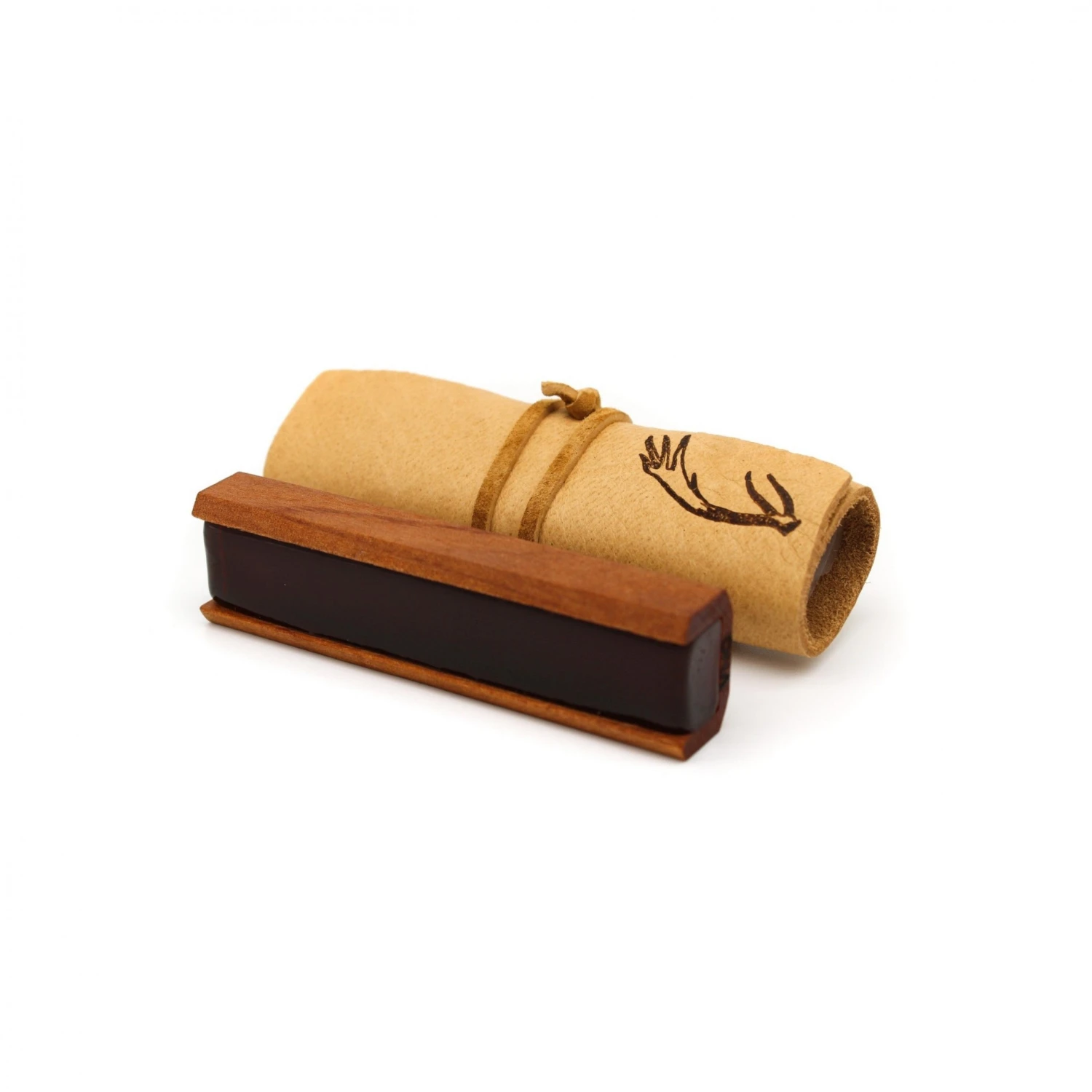
Leatherwood Bespoke Rosin begins with an exceptional housing—Australian timber and leather that serves as more than mere packaging. The wooden container provides optimal protection against temperature fluctuations, while the leather wrapping offers superior grip during application. This thoughtful construction stands in stark contrast to the plastic containers and cardboard boxes that house conventional rosins, which often crack during travel or fail to protect their contents from humidity.
Chemical Composition: The Alchemy of Sound
At its core, Leatherwood’s formula represents a meticulous blend of Australian and international resins, carefully selected for their specific acoustic properties. Unlike single-origin rosins that offer limited tonal palette, this hybrid approach creates a complex matrix of hydrocarbons, resin acids, and essential oils that work in concert to produce both warmth and clarity. The absence of artificial additives or fillers ensures pure vibration transfer from bow to string, eliminating the harsh overtones and scratchiness that plague many commercial brands.
Mechanism of Action: The Science of Connection
The rosin’s primary function revolves around creating controlled friction between bow hair and strings. Leatherwood’s unique formulation creates microscopic particles that temporarily adhere to both surfaces, forming thousands of minute contact points that grab and release the string with precision. This mechanism differs fundamentally from conventional rosins, which often create either excessive stickiness that hampers technical passages or insufficient grip that compromises projection. The bespoke formulation allows for what engineers would call “optimal coefficient of friction”—just enough resistance to set strings vibrating fully, without impeding the bow’s movement.
Beyond the Ordinary: How Leatherwood Redefines Rosin Performance
The Performer’s Journey: From Compromise to Confidence
Where ordinary rosin serves as a mere functional necessity, Leatherwood Bespoke becomes an active participant in the cellist’s artistic narrative. It’s the difference between a painter working with a limited palette of primary colors versus one with access to the full spectrum of nuanced hues. This rosin doesn’t just facilitate sound—it becomes a collaborative partner in interpretation, responding to the subtlest changes in bow pressure and speed with corresponding tonal variations that give voice to musical intention.
The Intangible Advantage: Emotional Resonance
Beyond measurable performance metrics, Leatherwood carries an emotional premium that transcends its physical properties. The knowledge that each cake represents artisanal craftsmanship—the careful selection of resins, the hand-finished timber casing—creates a psychological connection that mass-produced alternatives cannot replicate. This emotional investment translates to performance confidence, as musicians trust in tools that reflect their own commitment to excellence.
For the Discerning Cellist: Who Benefits Most from Leatherwood Bespoke?
The Leatherwood Bespoke Rosin system serves multiple segments of the cello community with particular effectiveness:
Professional Orchestra Musicians
For those navigating the acoustic challenges of different concert halls and repertoire, the dual-formula approach provides essential adaptability. The Crisp variant cuts through dense orchestral textures in Romantic works, while Supple offers the warmth needed for Baroque and Classical periods.
Solo Performers & Recording Artists
In contexts where every nuance matters—whether in a solo recital hall or recording studio—the rosin’s ability to enhance projection without harshness becomes invaluable. The consistent traction ensures technical reliability during demanding passages.
Advanced Students & Pedagogy
For developing musicians establishing their sound concept, Leatherwood provides a stable foundation that responds predictably to technical development. Teachers appreciate how different formulas can help students understand tonal production concepts.
Instrument Collectors & Connoisseurs
Those fortunate enough to own multiple fine instruments benefit from being able to match specific rosin characteristics to individual cello personalities, much like selecting the right bow for a particular piece.
The Transformation Journey: From Frustration to Mastery
Initial State: The Universal Compromise
Most cellists begin with a generic rosin that came with their first bow or was recommended by a local music store. They notice limitations—perhaps excessive dust, inconsistent grip, or tonal qualities that don’t match their instrument’s character—but accept these as inherent to the medium. The musician develops compensatory techniques to work around these limitations, never realizing how much mental energy is devoted to overcoming an inadequate tool.
Trigger Event: The Moment of Recognition
The awakening often comes during a pivotal musical experience—hearing another cellist produce a remarkably clear yet warm sound, struggling with a difficult passage that should be technically manageable, or recording a performance and being disappointed with the captured tone. The musician realizes their sound isn’t fully representing their artistic intent, and begins questioning whether equipment limitations might be contributing to the gap between conception and execution.
The Struggle: Navigating Misguided Solutions
The search for improvement typically leads down frustrating paths—experimenting with various commercial brands that each solve one problem while creating another, applying rosin more heavily (creating dust clouds and gumminess), or even modifying technique in ways that compromise other aspects of playing. This trial-and-error process can continue for years, with each attempted solution adding to the collection of partially-used rosin cakes that testify to ongoing dissatisfaction.
Product Intervention: The Leatherwood Difference
Discovery of Leatherwood Bespoke Rosin often comes through colleague recommendation or encountering it in a professional context. The initial application reveals immediate differences—the velvety texture of Supple creating unexpected warmth in the lower register, or the decisive attack of Crisp bringing articulation to previously “woolly” passages. The dual-formula system provides the vocabulary to describe and address specific tonal goals, transforming rosin from a generic necessity to a precision tool.
Transformed State: Technical and Artistic Liberation
With Leatherwood, the cellist enters a new relationship with their instrument. Bow control becomes more precise, with predictable response across different dynamics and bow speeds. The mental energy previously devoted to compensating for rosin limitations redirects toward musical expression. The performer discovers nuances in their sound that were previously obscured, and technical passages feel more secure because the bow-string connection behaves consistently.
Cognitive Shift: Redefining Possibility
The ultimate transformation involves reconceptualizing what’s possible in tone production. The cellist understands that rosin isn’t merely a necessary evil but an active collaborator in sound creation. This awareness extends to other aspects of their setup, creating a more holistic approach to instrument adjustment. The musician becomes not just a player but a sound architect, with Leatherwood as an essential tool in their creative toolkit.
Voices of Experience: The Cellist Community Speaks
“After twenty years in a major symphony orchestra, I’d resigned myself to the limitations of conventional rosin. Leatherwood’s Supple formula transformed my approach to the Dvořák Cello Concerto—finally, I could achieve the warmth the piece demands without sacrificing projection over the orchestra. It’s the most significant improvement to my setup in a decade.”
— Jonathan R., Principal Cellist
“As a recording artist, I’m hyper-aware of how equipment translates to microphone. Most rosins either create bow noise or fail to provide enough ‘bite’ for clear articulation. Leatherwood’s Crisp variant gives me the definition I need for Bach suites without the harshness that plagues so many ‘professional’ brands. My producer noticed the difference immediately.”
— Sophia L., Recording Artist & Soloist
“I recommend Leatherwood to all my advanced students because it helps them understand tonal production conceptually. The dual-formula system provides tangible examples of how different friction characteristics affect sound. Students who switch often show immediate improvement in bow control because they’re no longer fighting their equipment.”
— Professor Michael T., Conservatory Faculty
Beyond the Practice Room: Leatherwood in Action
The Recording Studio Session
In the critical environment of the recording studio, where every nuance is captured and amplified, Leatherwood’s consistent performance and minimal dust production prevent the retakes often necessitated by inconsistent rosin behavior. The ability to switch between Supple and Crisp formulations allows for quick adaptation between different repertoire pieces without changing fundamental setup.
The Touring Musician’s Challenge
For cellists navigating different climates and concert halls, Leatherwood’s stable formulation and protective casing prevent the melting or cracking that often plagues conventional rosins during travel. The timber container provides superior protection against temperature fluctuations that can compromise rosin integrity during cargo hold transport.
The Pedagogy Moment
In teaching contexts, the tangible difference between Supple and Crisp formulations provides an excellent demonstration tool for concepts of tonal color and bow-string interaction. Students can physically experience how different friction characteristics affect sound production, accelerating their technical development.
The Historical Performance
For cellists working with period instruments or gut strings, Leatherwood’s natural formulation and absence of synthetic additives provide the appropriate friction characteristics without the excessive grip that can damage delicate older instruments or historic string types.
The Final Measure: Why Leatherwood Represents More Than Rosin
In the nuanced world of string performance, where the smallest variables can significantly impact artistic expression, Leatherwood Bespoke Rosin stands as a testament to what happens when craftsmanship meets scientific understanding. It represents a fundamental shift in how musicians conceptualize the relationship between tool and artistry—not as a necessary compromise but as an active collaboration.
The true value of Leatherwood extends beyond its immediate acoustic benefits. It serves as a reminder that excellence often resides in the details overlooked by mass production, that the pursuit of artistic perfection requires attention to every element in the chain of creation. For the cellist seeking to close the gap between musical conception and audible realization, between technical capability and expressive potential, this small amber cake represents not just an equipment upgrade but a transformational tool.
In an age of disposable products and standardized solutions, Leatherwood’s artisanal approach—from its careful resin blending to its hand-finished timber casing—stands as a quiet rebellion. It affirms that some things are still worth doing properly, that some relationships (even between musician and rosin) deserve thoughtful cultivation. For those who have experienced the difference, there is no return to the limitations of ordinary rosin—only the continued exploration of what becomes possible when the right tools are placed in dedicated hands.
Experience the Leatherwood difference for yourself and discover what your cello has been waiting to express.